Timber Frame Homes
Architecturally driven timber homes built for strength, clarity, and generations of use.
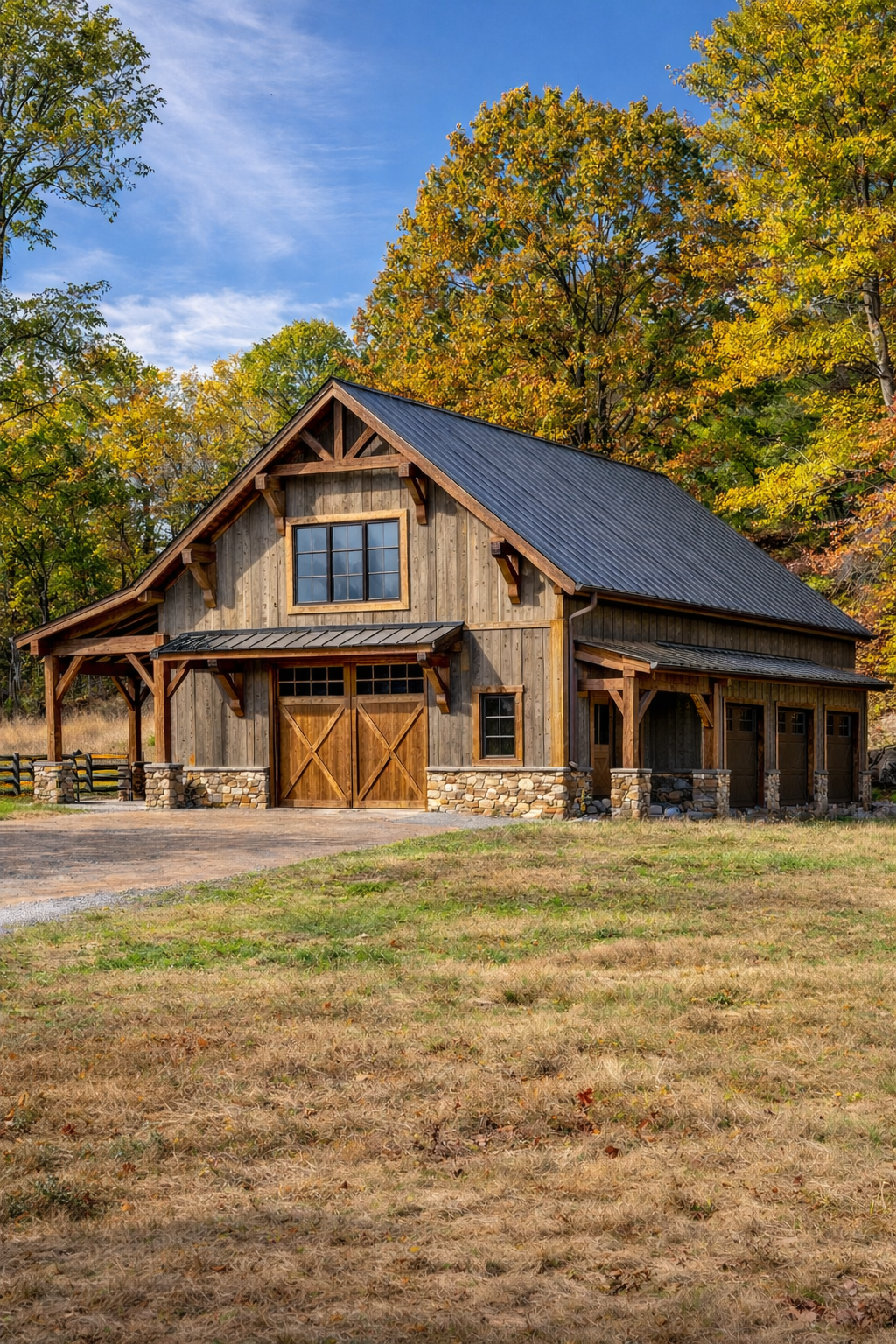
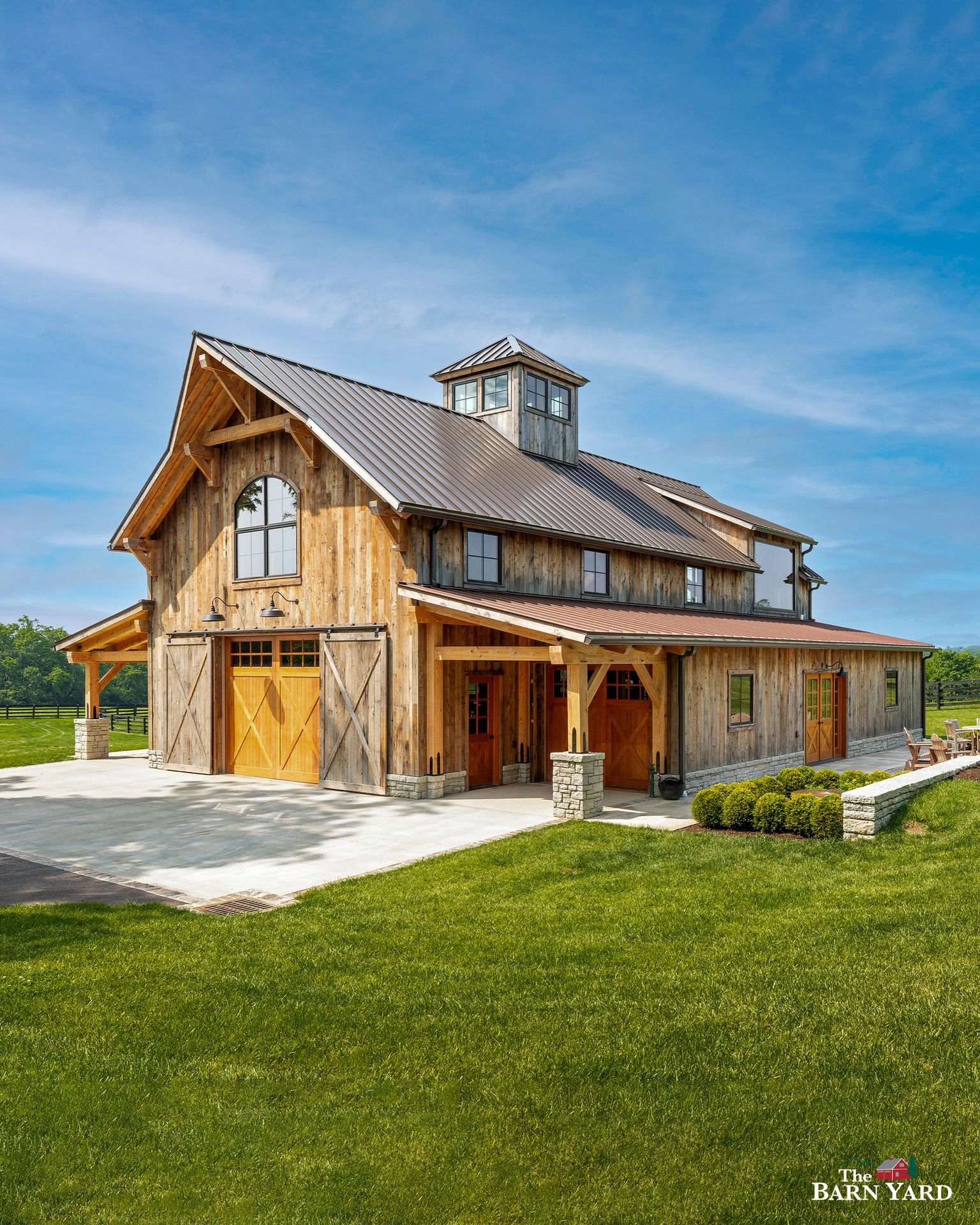
At Framework & Field, timber frame homes are designed from the structure outward. Exposed joinery, honest materials, and proportion-first design define every build. From primary residences to mountain retreats, each frame is crafted with precision and purpose.
Timber Frame Homes Built to Last for Generations
A true timber frame home is more than a style. It is a structural system rooted in strength, clarity, and craftsmanship. At Framework & Field, we design and build custom timber frame homes defined by exposed joinery, honest materials, and enduring form.
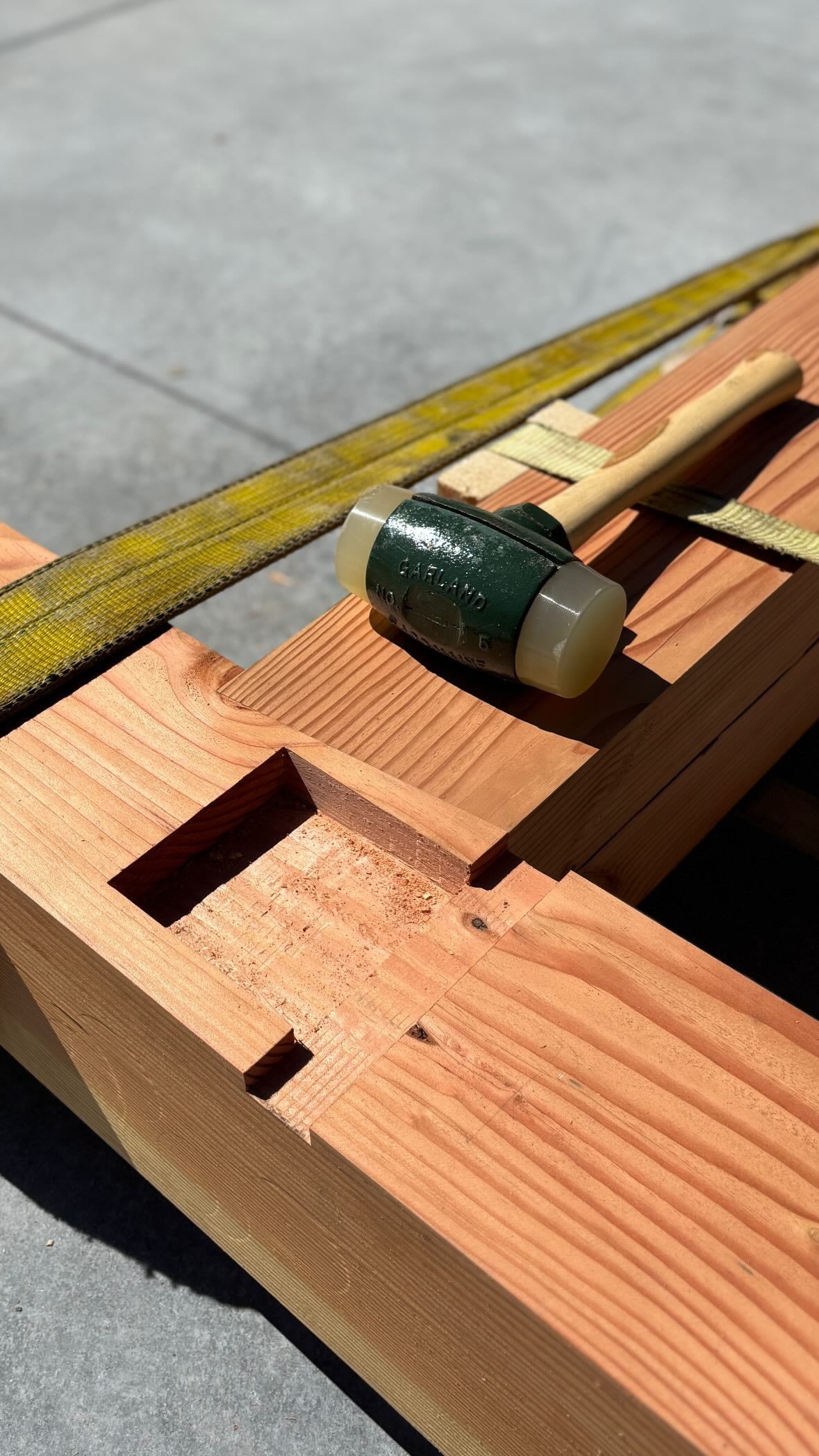
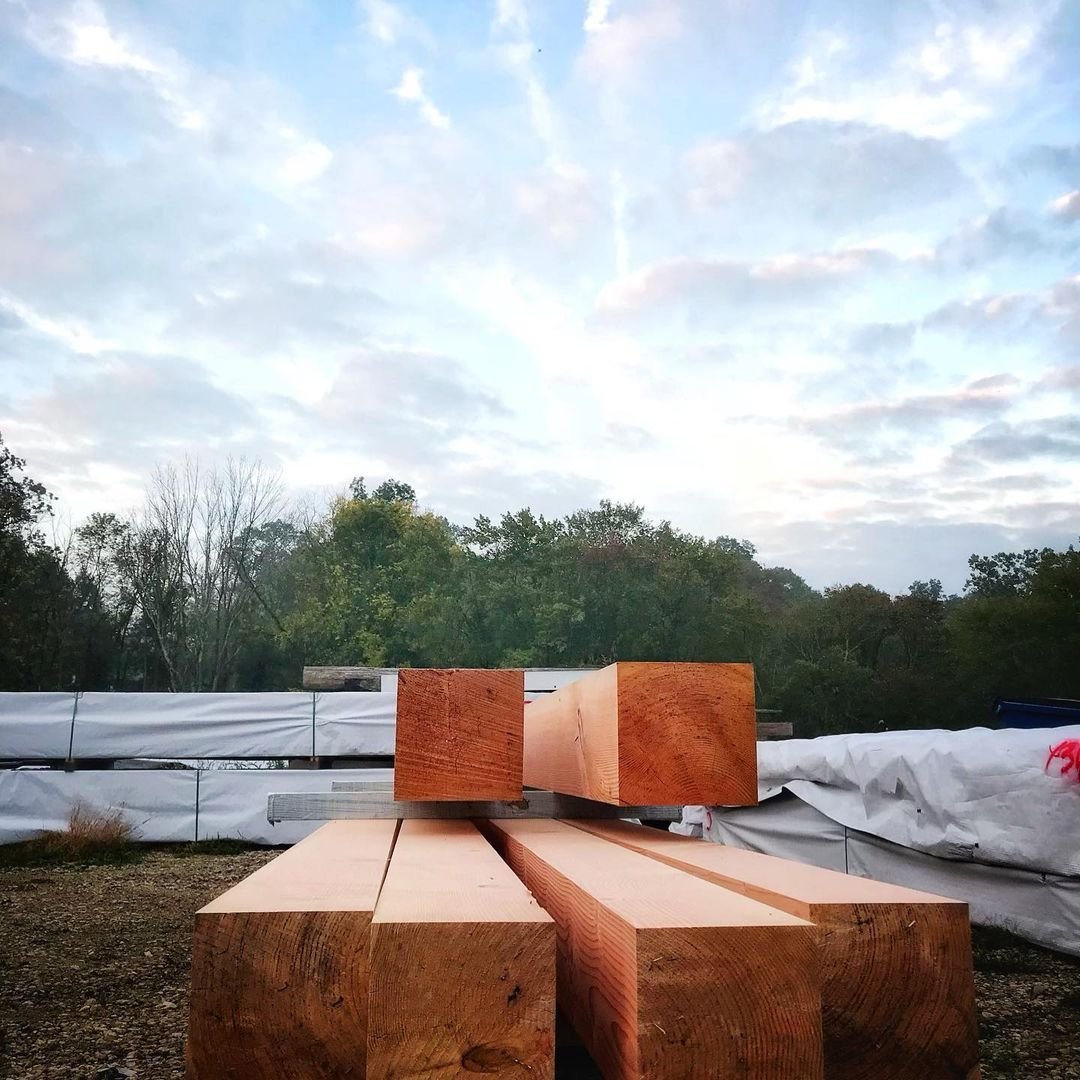
Each home begins with real timber: southern yellow pine, douglas fir, oak, and other select species, shaped and joined with traditional mortise and tenon connections. No hidden shortcuts. No applied décor. Just structure doing what it was meant to do.
What Is a Timber Frame Home?
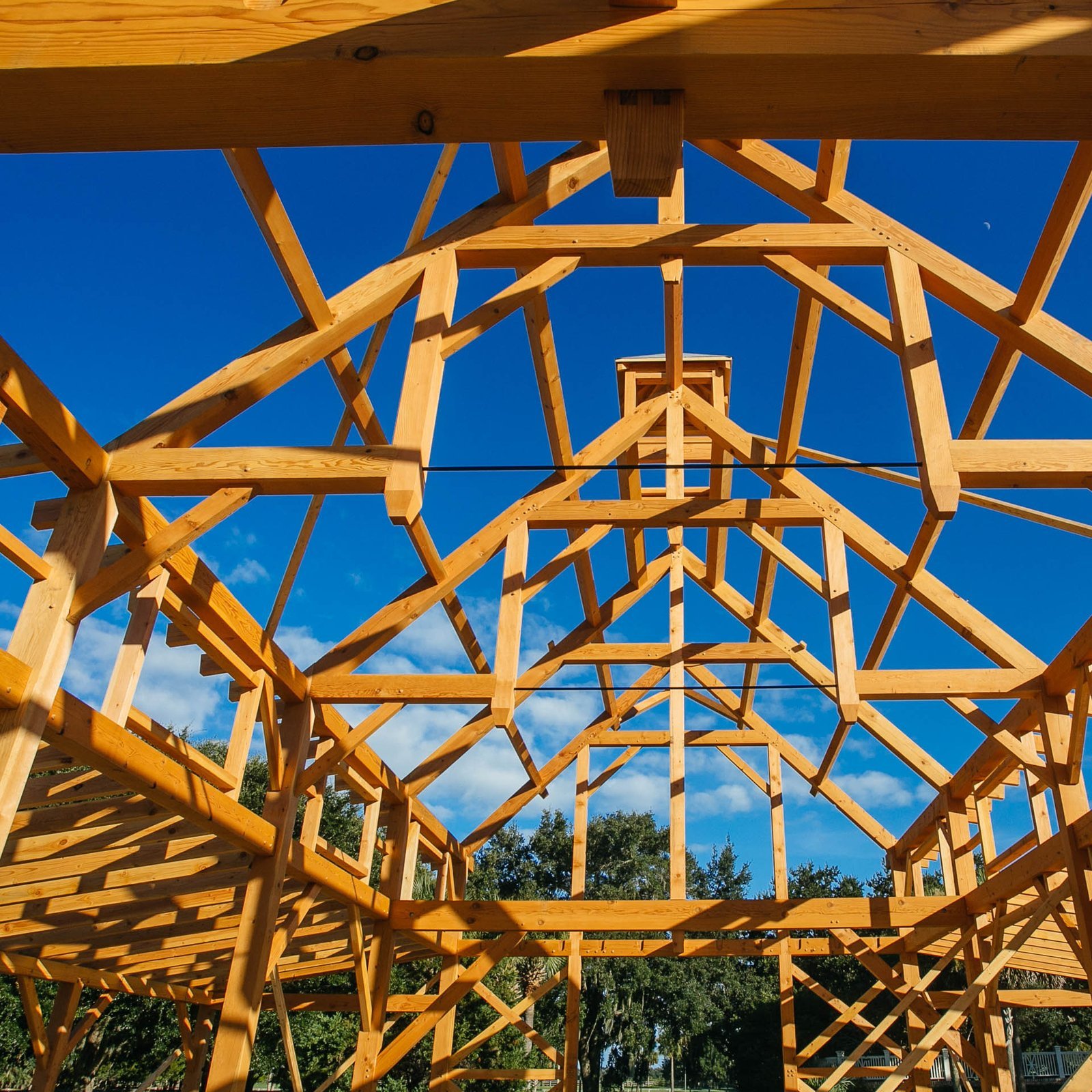
A timber frame home uses large structural timbers connected with engineered joinery to create the primary skeleton of the building. Unlike conventional framing, the structure remains visible, celebrated as a defining architectural feature.
Timber framing allows for vaulted ceilings, expansive great rooms, covered porches, and complex roof systems that conventional construction simply cannot achieve with the same presence.
If you are comparing building systems, explore our Field Guide to understand how timber frame homes differ from post-and-beam or stick-built construction.
Benefits of Timber Frame Homes
A building system that shapes how a home looks, lives, and lasts.
Timber frame homes are designed from the structure outward. This approach shapes how the home looks, how it lives, and how it performs over time. The result is a building system that offers clarity of design, long-term durability, and exceptional comfort.
Design Benefits
Timber framing allows the structure to become the architecture.
Large timbers carry the load, which opens the interior and removes the constraints of conventional framing. This creates expansive rooms, tall ceilings, and flexible floor plans that can evolve with how you live.
Exposed joinery and natural wood bring warmth and character that can’t be replicated with decorative finishes. Whether the design leans modern, traditional, or somewhere in between, the frame gives the home a sense of order, honesty, and permanence.
Because the structure is intentional from the start, timber frame homes adapt easily to site conditions, views, and natural light—making each home feel grounded in its place.
Performance Benefits
Timber frame homes are built to perform as well as they look.
The structural frame works seamlessly with modern enclosure systems to create an airtight, well-insulated building envelope. This leads to consistent indoor temperatures, fewer drafts, and lower energy demands year-round.
With fewer load-bearing interior walls, mechanical systems can be designed more efficiently, improving airflow, acoustics, and long-term serviceability.
The mass and spacing of the frame also contribute to durability and resilience. Timber frame homes are known for standing the test of time—not just structurally, but in how they age and remain relevant for generations.
Sustainability Benefits
Timber framing is inherently resource-conscious.
Wood is a renewable material, and when responsibly sourced and properly detailed, it stores carbon rather than emitting it. The longevity of timber frame structures means fewer rebuilds, fewer replacements, and less material waste over time.
Precision fabrication reduces job-site waste, and the flexibility of the system allows homes to be built smaller, smarter, and more efficiently—without sacrificing comfort or character.
A timber frame home isn’t designed around trends. It’s designed to last, adapt, and age with integrity.
In short: Timber frame homes offer architectural freedom, lasting performance, and a material honesty that rewards thoughtful design.
Floor Plans & Design Options
A starting point, not a limitation.
Our timber frame homes begin with thoughtfully developed plans that establish proportion, structural logic, and livable flow. These plans provide a clear foundation while allowing room for refinement based on how you want the home to function, where it will be built, and what matters most to you.
Pre-Designed Plans
Our pre-designed plans are created specifically for timber frame construction.
Each plan is developed with the frame in mind—post spacing, beam layout, roof geometry, and open interior volumes are resolved from the start. This ensures that the structure and the layout work together naturally, not as separate systems.
Plans vary in scale, layout, and character, offering a range of starting points without requiring a fully custom design from day one.
Timber Frame Home Plan
Plan Sample 1
Our clients’ words speak louder than any blueprint. From homeowners who dreamed of a timeless timber frame to businesses who needed a structure that inspires, their experiences tell the story of craftsmanship, dedication, and enduring quality. Here’s what a few of them have to say.
Timber Frame Home Plan
Plan Sample 2
Our clients’ words speak louder than any blueprint. From homeowners who dreamed of a timeless timber frame to businesses who needed a structure that inspires, their experiences tell the story of craftsmanship, dedication, and enduring quality. Here’s what a few of them have to say.
Customization & Adaptability
Every plan is adaptable.
Layouts can be adjusted to accommodate different sites, views, room configurations, and levels of finish. Ceiling heights, porch layouts, window placement, and interior organization can all be refined while preserving the integrity of the frame.
The goal is not endless choice, but thoughtful flexibility—enough to shape the home around your needs without losing clarity or coherence.
Plans provide direction. The right adjustments make them personal.
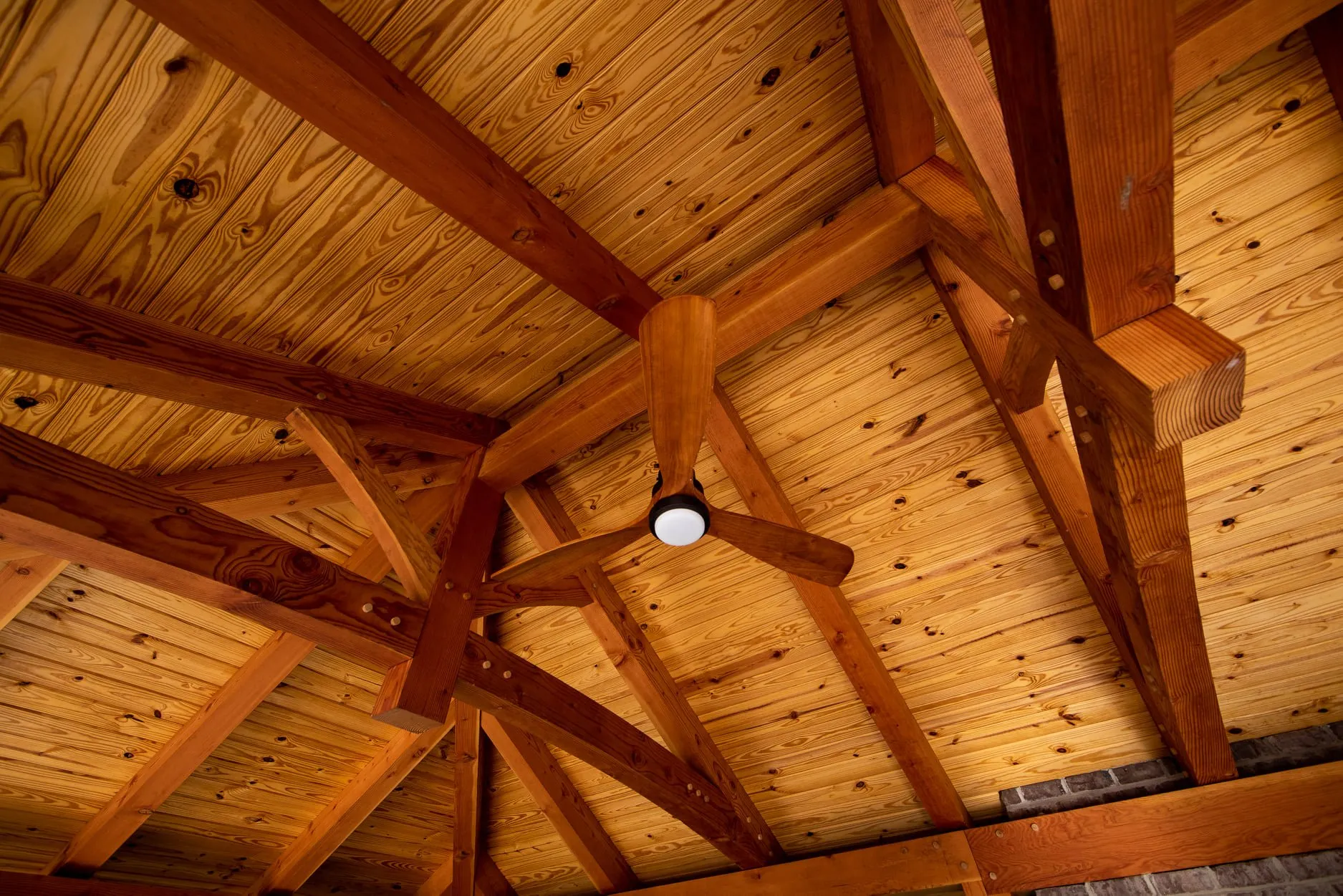
Why Choose a Timber Frame Home?
A structural system rooted in strength, freedom of design, and long-term intention.
Timber frame homes are chosen not simply for how they look—but for how they perform, how they feel, and how they endure over time.
1. Structural Integrity
Heavy timber is inherently strong, dimensionally stable, and capable of spanning greater distances with fewer interior load-bearing walls.
2. Architectural Freedom
Large clear spans allow open-concept living spaces without compromise.
3. Long-Term Value
Timber frame homes are designed to last centuries—not decades. The structure itself becomes a generational asset.
4. Aesthetic Depth
Exposed timber creates warmth and scale that cannot be replicated with applied trim or faux beams.
5. Energy Performance
When paired with modern enclosure systems such as SIP panels or high-performance wall assemblies, timber frame homes can exceed standard energy codes.
Choosing a timber frame home means choosing to build once—and build well. It is a decision rooted in durability, craftsmanship, and architectural clarity. For homeowners who value substance over shortcuts, timber frame construction offers a rare balance of strength, beauty, and long-term performance.
Build Process
A clear path from first conversation to finished frame.
Building a timber frame home is a significant undertaking. Our process is designed to bring clarity early, reduce uncertainty, and ensure that every decision supports the structure, the site, and how the home will be lived in.
Each project follows a defined sequence—allowing flexibility where it matters and precision where it counts.
1. Discovery & Design
Every project begins with a real conversation.
We take time to understand how you want the home to function, how it will sit on the land, and what level of involvement makes sense for you. This stage establishes scale, layout, structural intent, and overall direction.
Whether starting from one of our plans or a custom design, the goal is alignment—between lifestyle, budget expectations, and architectural clarity.
2. Engineering & Detailing
Once the design direction is set, the structure is fully resolved.
The timber frame is engineered and detailed connection by connection. Joinery, load paths, and structural relationships are defined long before fabrication begins, allowing the frame to be built with confidence and precision.
This phase ensures that what is designed on paper can be executed cleanly in timber.
3. Fabrication
The frame is crafted off-site in controlled conditions.
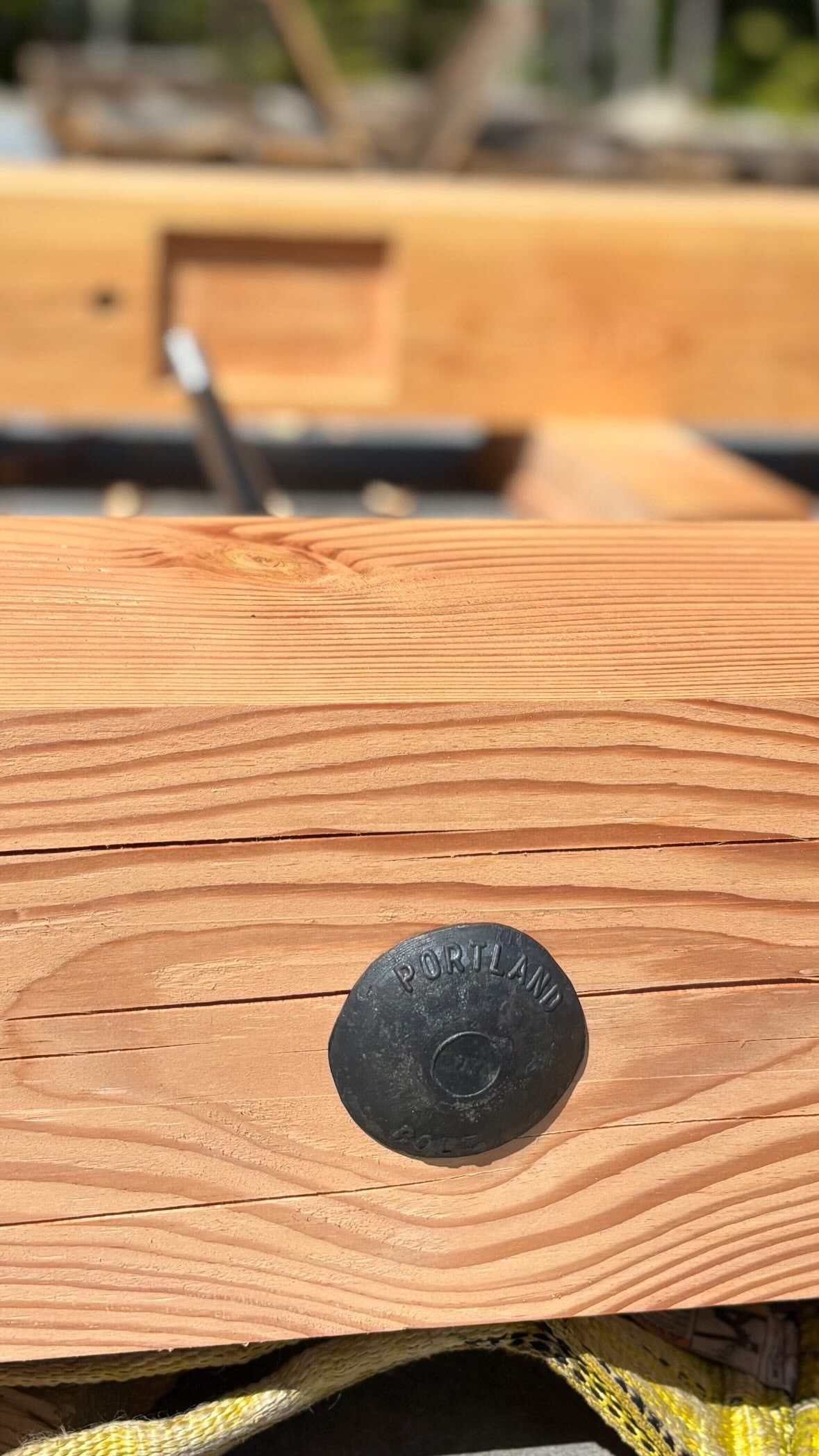
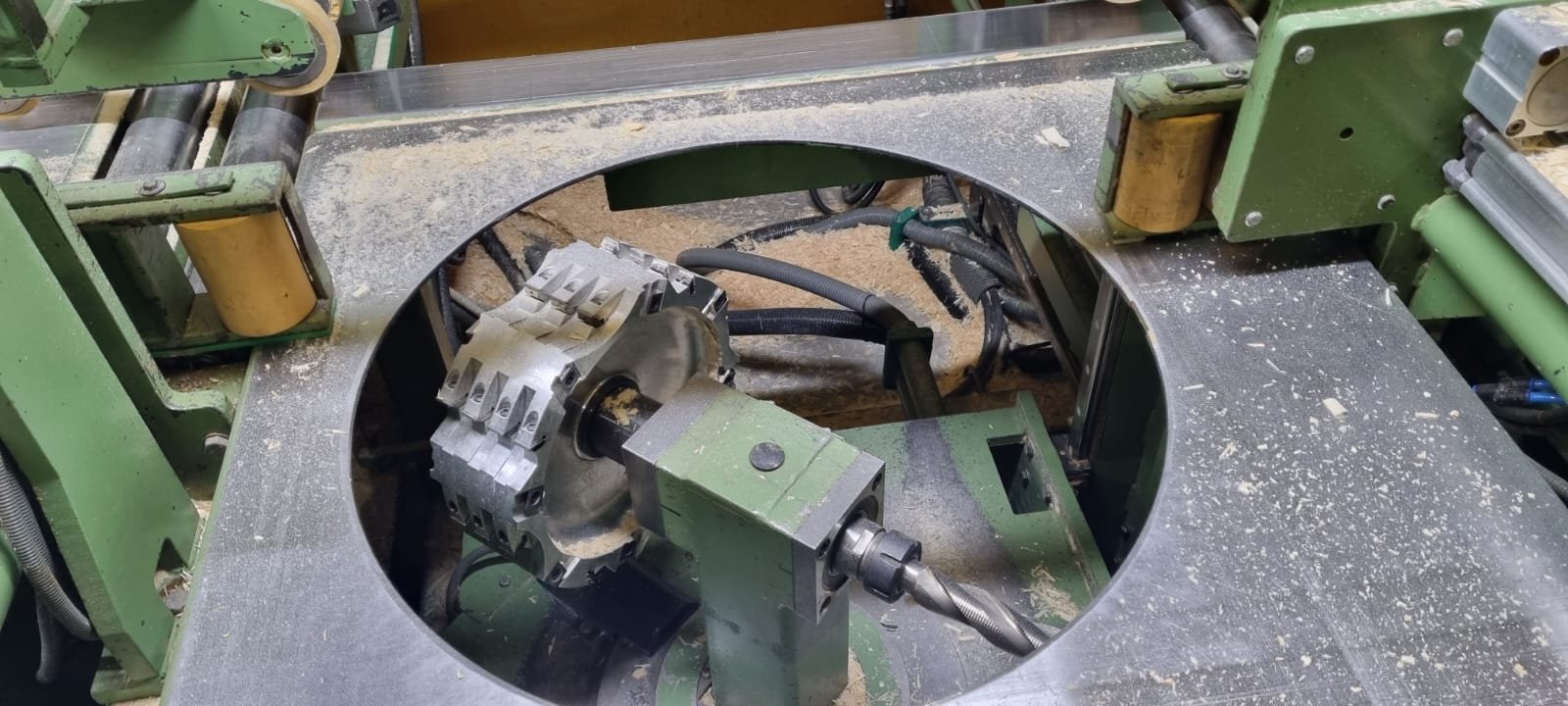
Timbers are cut, fit, and labeled using traditional joinery techniques combined with modern accuracy. This approach allows for a high level of craftsmanship while minimizing variability once the frame reaches the site.
By the time fabrication is complete, the entire structure has already come together—once.
4. On-Site Assembly
The timber frame is raised with efficiency and care.
Because the work is prepared in advance, on-site assembly is deliberate and efficient. Major structural elements are set in place quickly, and the form of the home becomes visible early in the build.
This stage marks the transition from components to structure.
5. Enclosure & Coordination
Once the frame is in place, the focus shifts to enclosing the home.
We coordinate with builders, trades, and project teams to ensure the timber frame integrates seamlessly with the rest of the building system—walls, roof, mechanicals, and finishes.
The result is a structure that performs as a cohesive whole, not a collection of parts.
A well-defined process allows the craft to show—and lets the experience feel measured, not overwhelming.
Materials & Craftsmanship
Quality is built in long before the frame reaches the site.
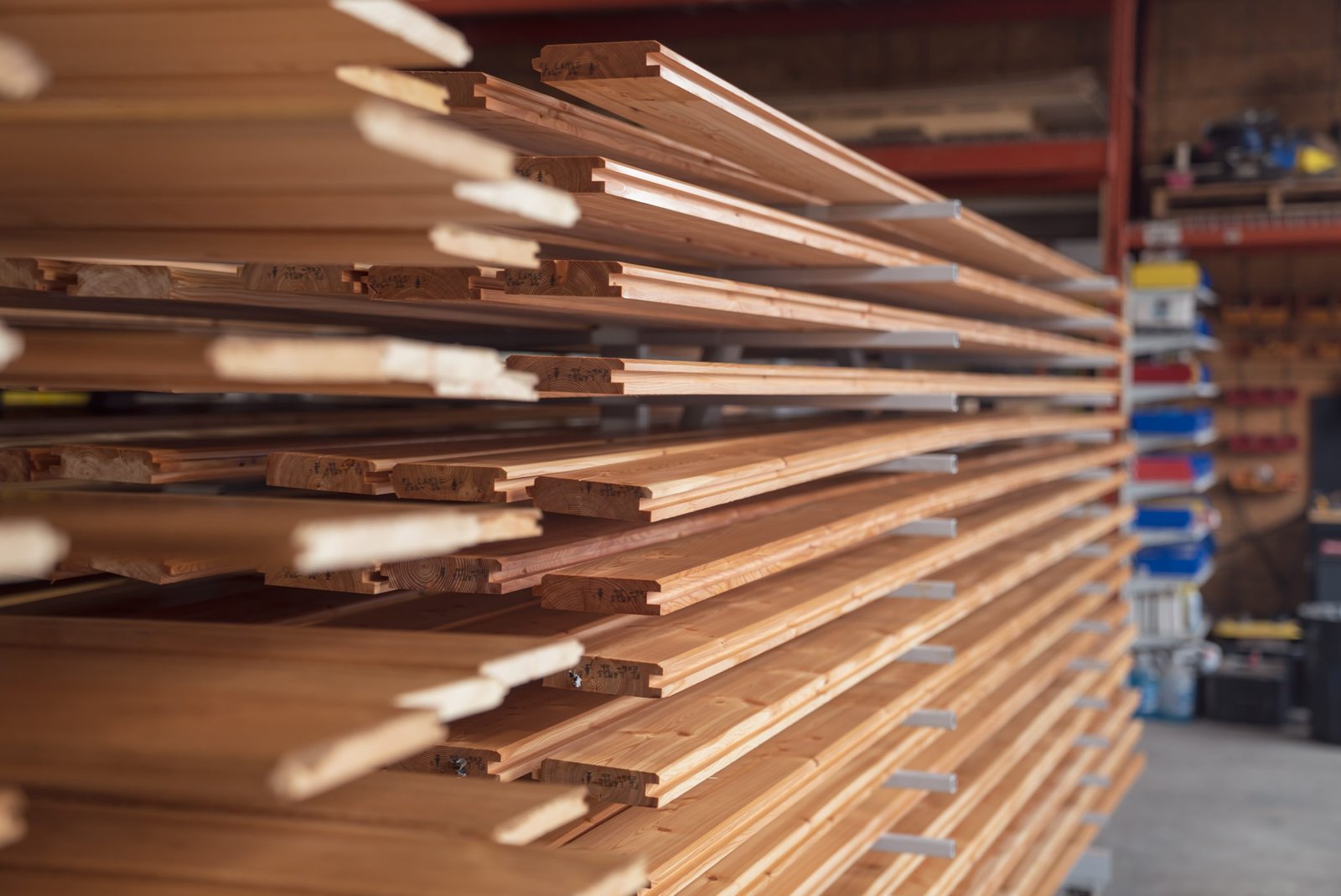
The character and performance of a timber frame home are shaped by the materials chosen and the care taken at every stage of fabrication. Our approach emphasizes structural integrity, material honesty, and repeatable precision.
Timber framing allows for vaulted ceilings, expansive great rooms, covered porches, and complex roof systems that conventional construction simply cannot achieve with the same presence.
If you are comparing building systems, explore our Field Guide to understand how timber frame homes differ from post-and-beam or stick-built construction.
Testimonials
Stories Carved in Timber
Our clients’ words speak louder than any blueprint. From homeowners who dreamed of a timeless timber frame to businesses who needed a structure that inspires, their experiences tell the story of craftsmanship, dedication, and enduring quality. Here’s what a few of them have to say.
Frequently Asked Questions
Timber frame homes are a different way of building, and naturally that brings questions. Below are answers to the most common topics we discuss with clients—from structure and cost to long-term performance. For a deeper understanding of timber framing for homes, we invite you to explore our Field Guide, where we break down systems, materials, and the building process in greater detail.
Start the Conversation
If you are ready to move forward, complete the form below and we will schedule a discovery call. Still exploring? Download our brochure or review our timber frame home plans to better understand the process.
Scope + budget alignment
Typical timelines
Next step recommendation
Are timber frame homes more expensive than conventional homes?
Yes, typically. Heavy timber is a premium structural system. However, it delivers unmatched durability, architectural impact, and long-term value.
Do you build the entire home or just the timber frame?
We offer multiple engagement levels, from structural timber packages to full design-build coordination.
Can a timber frame home look modern?
Absolutely. Timber framing is a structural system, not a style. It works equally well with contemporary architecture, mountain modern, farmhouse, or traditional forms.
How long does construction take?
Timeline depends on scale and complexity. Most timber frame homes require detailed design and fabrication prior to raising the frame on site.
Do timber frame homes require special maintenance?
Timber frame homes do not require unusual structural maintenance. The heavy timber frame is protected inside the building envelope and is designed to last for generations. Exterior wood elements such as porches or exposed beams will require routine finishing and care depending on climate and exposure. Like any well-built home, longevity depends on proper detailing, quality materials, and ongoing stewardship.
Let’s Talk About Your Project
A brief conversation helps determine fit, clarify scope, and outline next steps — whether you’re early in planning or ready to move forward.